
The Weekly Dispatch
Art for Everyone—Kinda Sorta

I first met local artist Wendy Michelle Davis outside of Studio Grocery last November, while Ellen Mote drew a contour line portrait of my wife. Davis and I chatted about the Austin Avenue Art Fair she’d organized going on that weekend. It included Mote’s live drawings and other locations such as an art market at Hotel Herringbone.
I didn’t know exactly what to say about it all. I’m not really an art guy. For me, it’s always hard to have something even remotely intelligent to say beyond “that’s cool” or a more neutral “hmm, interesting.” But I knew what Davis had put together took a lot of effort.
So as we stood in the sunlight on the sidewalk, I defaulted to saying how I appreciated the hard work she’d put into this and that her efforts were not unnoticed or unappreciated. By then, in the background, Mote and my wife were talking about visiting South America.
I spent five years publishing a weekly events listing newsletter that included plenty of art events, but that didn’t necessarily give me a better idea as to what the “arts scene” is in Waco. Exhibition openings at Art Center Waco? Bob Ross paint and sip nights rotating around different bars and restaurants? A fresh round of art hung on the walls at Thrst Coffee? New paintings for sale at Washington Gallery?
Some of this, maybe even all of it, makes up Waco’s art scene, but exactly how it fits together has long been a mystery to me. And if you want to support the arts in Waco—not just pay lip service by saying “that’s cool”—what does that mean?
So when I talked with Davis last week, I was hoping for some clarity, which I got. Kinda sorta.
On the one hand, she talked about the arts in broad, welcoming terms. During our conversation, Davis described creativity as something that’s “innately human” and said too many adults stop making art after deciding it’s only for a select few or the naturally talented.
“Some people have this void in their life,” Davis said, “and they don’t even realize it.”
That explains why Davis spends so much time organizing workshops, art markets, and public-facing events around Waco. Some are designed for serious collectors, others for casual curiosity, and still others for people who have not picked up a paintbrush since elementary school but miss the feeling of making something.
On the other hand, Davis does not approach organizing the Austin Avenue Art Fair with an “anything goes” philosophy. For it and her other art markets, she emphasized they’re not for every self-identified artist with $25 and a folding table.
“I vet my applicants,” Davis explained, “because I want to showcase a grouping of quality art by people who have invested a lot of their life into it.”
I found the tension between those two positions interesting. Davis clearly believes creativity should be accessible and that participation matters. She also believes discernment counts too. But in many conversations about supporting the arts, those ideas are often framed as opposites. But maybe they aren’t mutually exclusive.
A couple of years ago, I attended the dedication of a new mural that stretched across one side of the Dr Pepper Museum with giant blocks of color, floating soda bubbles, and other soft drink imagery. It was a project done by Creative Waco’s ARTprenticeship program, which has professional artists mentoring local high school students.
Shortly before the event started, however, dark clouds rolled in and rain started coming down, so everyone moved indoors. Usually, that would be an excuse for half the crowd to quietly disappear.
Instead, seemingly everybody crowded into the museum building, eating ice cream treats from Helados de Azteca, while city officials, mentors, parents, and museum staff continued talking about the mural like the weather was just another hoop to jump through. Kids posed for photos with beaming parents, and the whole thing felt less like a generic “community arts event” than multiple layers of support aligning at the same time.
Because whatever “supporting the arts” means in practice, this seemed closer to it than simply saying nice things about creativity online or “hmm, interesting” in person. Somebody had to approve the wall space. Somebody had to fund materials. Somebody had to coordinate schedules, organize mentors, manage students, and keep the project moving long enough for the mural to exist in the first place. And after the dedication ended, the thing itself remained behind: huge, public, and impossible to miss.
But even when everything comes together for a big project like the Dr Pepper mural, celebration alone is not enough either.
Recently, when I talked to Ellen Mote about the arts environment in Waco, she described the city as “safe and supportive,” but admitted that same atmosphere doesn’t always push artists to create their riskiest work. She qualified that by emphasizing that audiences everywhere respond differently to art and that creative pressure exists in every city. Still, her observation lingered with me because it pointed toward a contradiction in many local arts scenes: support and artistic risk do not always comfortably coexist.
And honestly, I don’t know how to resolve that because I’m still not entirely sure what I’m looking at half the time anyway. But maybe that uncertainty is necessary. Support alone is not enough if nobody expects (or recognizes) artists who push themselves beyond what already feels safe. Then again, audiences have to be willing to follow artists somewhere unfamiliar.
I do know this: when Plus Waco Comics released its first comic book, I made sure I went to the release party. Comic books are not really my thing, but I knew a couple of the co-founders in passing from Bare Arms Brewing. Copies were stacked on a folding table waiting to be sold for actual money, which somehow made the whole thing feel more vulnerable and more serious at the same time. It was no longer just another conversation about creativity and ideas about what might be done some day. And I was happy to buy my autographed copy to support that.
That’s the part of the Waco arts scene I do understand: the end result. Sometimes that work winds up hanging in a gallery. Or a coffee shop. Sometimes it disappears almost entirely. But what it boils down to is somebody finishing the work itself and someone else taking the time to really see it.
Heart of Texas Drink ‘N Draw
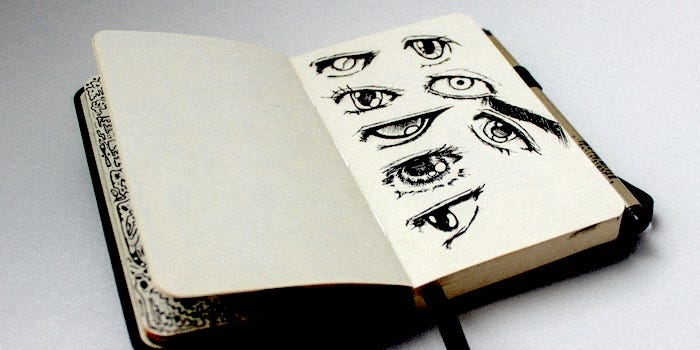
When I worked in the Bare Arms taproom on La Salle Avenue, local artists and graphic designers periodically clustered in the events/overflow room to (maybe) drink a beer or two while drawing this and that. It was less about excellence than the chance to commiserate with other creatives about the fact that, yes, the struggle is real: to carve out time to show the naysayers—especially the one buried inside each of us—that making something new out of nothing is worthwhile.
The taproom on La Salle has long since closed, but Heart of Texas Drink ’N Draw meets on Friday, May 29, at 6:30 pm upstairs at Union Hall. The monthly gathering still functions more like a pressure-release valve than a formal art “gathering,” with plenty of rough sketches, chaotic doodles, and the kind of gallows humor artists develop after spending too much time alone with unfinished work.
Urban Stories Photography
Once at a company training event, we watched a video of people standing in a group, passing a basketball back and forth, and we were supposed to count how many times it changed hands. Then, when it was over, we were asked how many people saw the person in the gorilla suit walk through the scene. Say what? Nobody saw the gorilla. Now apply that idea to our day-to-day lives: the routine distractions we carry around filter out what’s directly in front of us.
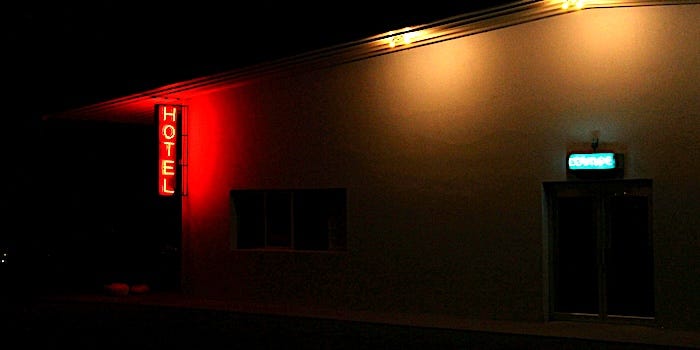
That could also be a theme of the new Urban Stories Photography exhibition at Art Center Waco that runs through June 27. Featuring works by 23 Texas photographers, much of the show moves between recognizable scenes—Waco’s downtown rooftops at night, the glowing Bel Air Motel sign in Austin, a Quik Stop at a highway intersection in Roanoke—and treats them as worthy of close examination instead of visual background noise. The result is empty streets, architectural geometry, isolated corners, and moments where cities feel decidedly still while observing themselves.
Creative Spark
In Waco, the same names reappear across the arts scene—Creative Waco’s Fiona Bond, Cultural Arts of Waco’s Doreen Ravenscroft, Cultivate Waco’s Debbie Wright—and eventually the lines start blurring between artist, organizer, volunteer, audience member, donor, and friend. Somebody hangs their work at a gallery opening one weekend, helps organize a market the next, then twists some arms to keep people showing up. Past a certain point, however, every arts scene needs systems to support it, not the same people stretched increasingly thin.
Creative Spark is Creative Waco’s effort to keep the local arts environment from surviving on turnout spikes and one-night-only enthusiasm. Yes, the membership fees help fund art and artists in Waco, but it’s more than another plea to open your checkbook. Studio visits, artist talks, workshops, and smaller gatherings are built around a simple idea: local scenes thrive by collapsing the distance between artists and supporters. The program is less passive arts patronage than a deliberate attempt to keep momentum going after the folding chairs are stacked and everybody goes home.

“Honey, The Town Has Just Blown Away”
On May 11, 1953, an F5 tornado tore through downtown Waco, killing 114 people and flattening much of the city center. Most people know the broad outlines of the story: the death toll, the collapsed buildings, the black-and-white photographs of rubble stretching for blocks. But in a 34-minute oral history documentary recorded decades later by the Waco Public Library, survivors describe something far stranger and more human: warm rain before the storm, darkness so thick people couldn’t see across the street, and a phone call that delivered the message, “Honey, the town has just blown away.”
🎧 This eight-minute episode of Your Waco Weekend looks at the difference between factual history and lived memory through the voices captured in The 1953 Tornado: The Force That Changed the Face of Waco. The conversation moves from documentary storytelling to a downtown memorial and the way catastrophic events slowly fade into the background of ordinary city life—except, perhaps, each May when storm season rolls through Central Texas again.
Subscribe to Your Waco Weekend wherever you get your podcasts—eight minutes, one story.
Coming Next Week
The Weekly Dispatch explores Waco’s cinematic subconscious through a 1970s urban renewal film that leads to a conversation about how cities narrate their futures. Then, three very different examples of how films preserve daily life—from punk rock to Waco’s year-round spooky subculture to the archival rabbit hole of a local history YouTube channel. This one is less about movies than the stories cities tell about themselves.
Thanks Mark for always viewing and pointing out both sides of the coin.
This same tension exists where music is concerned.
Much like a magician pulling a rabbit out of a hat again and again, artists of all types are faced with the same dilemma. Starve and push boundaries or get hired more often by presenting the same predictable trick over and over again.
Art and music should always seek to push new boundaries but there is the reality that making a living is necessary.
How many bands got famous doing covers vs the ones who created something unique?
While there is a need for a cover band that can play a wedding, It is my hope that through the work of all of the amazing artists here in Waco, (like the ones highlighted in your article) that more Wacoans learn to appreciate the ones who take risks and push boundaries to create their own style over repeating what has already been done in physical art as well as music.
Your articles take the time to point out those nuances while most artists stay busy just trying to make rent each month. Thanks for the work you are doing and sharing perspective with readers.