
The Weekly Dispatch
The Consequences of Attachment

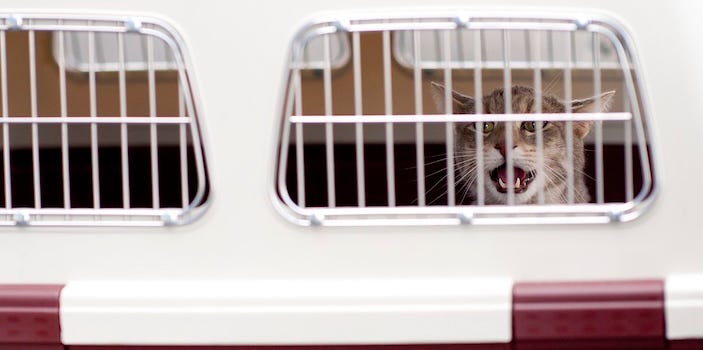
Years ago, one of our cats, HazMat, came down with some sort of stomach issue that left him throwing up every hour or so. We took him to our regular Waco vet, an old-school guy, long since retired, who’d been practicing long enough to describe Texas A&M’s vet program as being “out in the pawpaw patch” when he was there.
After a couple of visits and no improvement, he shrugged and said the next step was to “open him up and poke around inside.” I asked if there were any options short of “poking around,” and he gave us a referral to the Texas A&M Small Animal Teaching Hospital. We got in our car and immediately drove HazMat down to College Station.
The place looked less like an animal clinic than the Starship Enterprise. Everything gleamed. Specialists moved through hallways carrying charts and speaking in acronyms. After the exam, one of the vets stepped into the waiting room to explain the next series of tests and procedures.
Then he said: “First, we’ll need a thousand-dollar deposit.”
I fought the urge to ask how good A&M’s taxidermy program was.
Instead, I said, “Okay.”
My father maintains that the difference between large-animal and small-animal vets is that ranchers can put a number on what a horse, cow, or hog is worth. If treatment costs more than the animal itself, the decision, however unwelcome, is straightforward. But family pets, he said, where do you draw the line?
When I filled out the paperwork at our Waco vet’s office for HazMat, one question asked how I felt about him: was he a member of the family, a pet I liked, or just some animal? But by the time you’re driving a vomiting cat for 90 minutes down Highway 6 to a veterinary teaching hospital, he’s definitely family.
The problem is that emotional attachment is increasingly colliding with real financial limits. Food costs more. Routine medications cost more. Just walking through an emergency clinic’s front door on the weekend costs a couple of hundred dollars.
HazMat had to stay overnight at the small animal hospital, so my wife and I stopped at a Schlotzsky’s for lunch on our way out of town. I looked at our food and told her, “We better enjoy these sandwiches because they’re our summer vacation this year.”
Today, a network of nonprofits, financing programs, and aid services exists to help people absorb the rising cost of pet ownership. Private lenders CareCredit and Scratchpay spread veterinary bills into monthly payments similar to buying furniture or appliances, while the State of Texas now funds large-scale, low-cost sterilization and vaccination efforts. Closer to home, the Waco Animal Coalition provides information about a variety of local resources, ranging from pet food and other supplies to helping injured animals and more.
The reality is that the more expensive it becomes to have pets, the harder it is for cities and communities to treat their care as a purely personal responsibility.
What begins as a family and a pet eventually produces visible public consequences far beyond a single household. Shelters become perpetually overcrowded. Increasing numbers of stray animals appear in parks, apartment complexes, and college campuses. Veterinary clinics treat growing numbers of emergency cases tied to delayed treatment or neglected preventive care. Animal rescues operate under constant financial strain while municipalities contend with rising complaints about abandoned animals and roaming dogs.
On paper, there’s a simple solution: don’t own pets you can’t afford. No one is obligated to adopt a dog, rescue a stray cat, or spend thousands of dollars to extend an animal’s life. But life rarely stays frozen with the exact financial conditions that existed the day you first brought an animal home. People lose jobs. Rent climbs. Medical problems appear. Inflation reshapes household budgets one grocery trip at a time.
As for HazMat, the Texas A&M vets gave him a powerful new anti-nausea medication that stopped his vomiting almost immediately. The total bill wound up being “only” six hundred dollars. We drove past the Schlotzsky’s on the way home to Waco without stopping.
Living with a pet is mostly unglamorous, just the repetition of litter boxes, prescription refills, claw scratches across the forearm, and surprise vet bills. And then there are the half-awake midnight moments standing barefoot in the kitchen wondering whether the creature breathing softly on the living room couch is about to break your heart or your bank account—or both.
Send this to someone who’s stood in a vet office trying to figure out what to do next.
Petworking in the Park
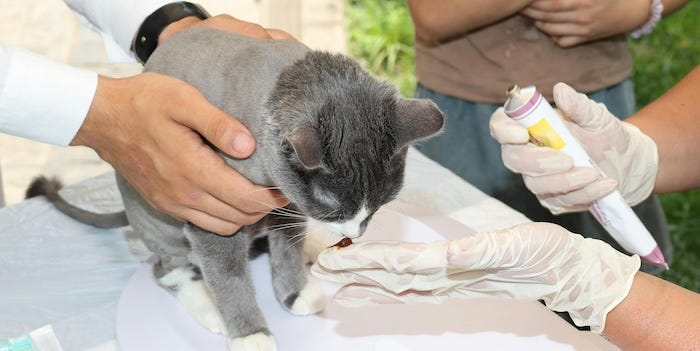
Petworking in the Park returns to Brazos Park East at 10 am on Saturday, May 9, with free vaccinations, microchipping, heartworm testing, nail trims, and basic wellness exams for the pets of McLennan County residents. Organized by Animal Birth Control Clinic with support from the City of Waco and other groups, the outdoor clinic has consistently delivered necessary pet care over the past four years.
Routine checkups and vaccinations once handled through regular vet appointments increasingly depend on low- and no-cost public clinics. Food trucks and vendors will line the park while residents queue for the preventive care that many now struggle to afford on a regular basis.
Kitten Care Kits
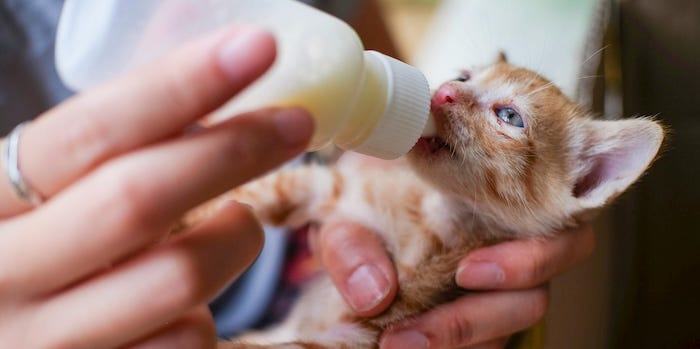
Animal Birth Control Clinic is also distributing “kitten kits” this spring, when large numbers of newborn cats turn up across neighborhoods and parks. Available at the clinic’s Clay Avenue location, the kits include kitten milk replacer, wet food, feeding supplies, and step-by-step care instructions intended to help residents care for very young kittens outside the shelter system.
Newborns require around-the-clock feeding and monitoring, a level of labor that can quickly overwhelm already crowded shelters during “kitten season.” The goal of the program is not simply rescue. It’s diversion: moving fragile animals into temporary home care before the shelter system is pushed beyond capacity.
Pet Supply Pantry
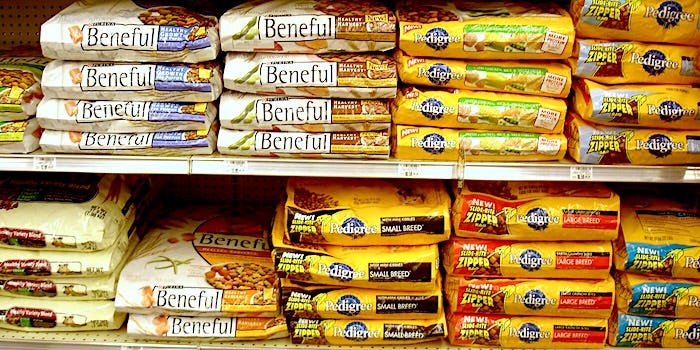
The Humane Society of Central Texas has partnered with Street Dog Cafe to create a pet food pantry at the East Waco restaurant. During regular business hours on Tuesday through Saturday, you can donate unopened bags of food, canned pet food, treats, leashes, collars, and other basics for local pet owners facing temporary hardship. Supplies are distributed on a first-come, first-served basis, with a limit of one bag of food per household.
Street Dog Cafe is built around a simple premise laid out plainly on its website: “We have three loves. Coffee. Sweets. Dogs.” The result is a coffee shop where pet supply donations have become part of the daily rhythm, alongside espresso drinks and blueberry muffins. Programs like this survive through small acts of repetition: one more bag of food dropped off, another person deciding to contribute instead of simply passing through.

One Grand Opening After Another
A newly opened coffee shop in Waco’s Uptown becomes the starting point for a broader look at how cities are filtered through social media. A first visit to Mila Café turns into a question about novelty versus endurance: why so many posts about different places now sound and look interchangeable, and what disappears once everything is framed around generic urgency.
🎧 This six-minute Your Waco Weekend episode moves between what gets amplified by the attention economy, what falls outside it, and how the things people remember about a place are rarely what first introduced it to them.
Subscribe to Your Waco Weekend wherever you get your podcasts—six minutes, one story.
Coming Next Week
Next week’s newsletter looks at the Waco places and traditions that survive largely outside the city’s perpetual online cycle of influencer buzz and algorithmic attention. From flea markets and honky-tonks to monthly storytelling circles, some institutions endure not because they constantly reinvent themselves, but because they quietly do what they’ve done well for decades. The result is a different way of thinking about what gives a city continuity after opening day festivities.