
The Weekly Dispatch
Jelly Roll, Post Malone & Zach Hill

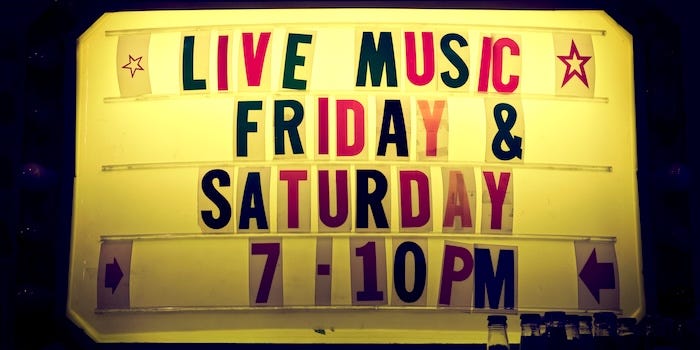
A few weeks ago, Jelly Roll and Post Malone pulled the plug on their planned stadium stop in Waco. Officially, the explanation involved finishing an album and reshuffling the schedule.
At the same time, however, the music industry has started using a new phrase for what’s happening to stadium tours around the country: “blue dot fever.” The phrase comes from the clusters of unsold seats glowing across Ticketmaster seating charts for artists ranging from Meghan Trainor to The Pussycat Dolls.
Part of it is simple math. Concert tickets cost more than they did a few years ago. Gas costs more. Hotels cost more. Moving trucks, lighting rigs, trailers, crews, and entire rolling villages of equipment crossing the country have become their own kind of traveling casino where the house eventually wins.
Big-name arena tours appear inevitable right up until the moment they don’t. One weak market becomes two. Two becomes six. A few blue dots become entire empty sections staring back at the stage.
So if scale doesn’t guarantee success, where does that leave local music scenes?
In Waco, it looks like solo musicians trucking their PAs into Squirrely’s Tavern at Camp Fimfo. It looks like a Truelove barback pushing tables against the wall to make enough room for an impromptu dance floor. It looks like the usual suspects playing the same rooms often enough to stay visible—but not so often that audiences stop paying attention.
But keeping a local music scene running from one weekend to the next is different from changing its trajectory. That’s where Waco’s Zach Hill enters the picture.
When I spoke to Hill recently, it was clear he’s not simply interested in trying to book more gigs for himself. Instead, he talks about the Waco music scene as a system with multiple moving parts depending on each other.
He also knows a music scene doesn’t sustain itself on its own.
One of the first things we talked about is consistency. In his view, fewer venues in Waco should treat live music like a short-term experiment instead of a long-term routine. A bar tries music on Thursday nights for a month or two, turnout fluctuates, management gets impatient, and the whole thing quietly folds. Audiences, meanwhile, often decide very quickly whether a place is worth returning to.
“You kind of get one chance around here,” he told me. “If people go there and there’s live music one week and then not the next, they won’t return.”
That instability creates another problem: musicians end up carrying most of the promotional burden themselves. At the same time, Hill argues that many performers approach social media too casually, throwing together a single Facebook post a few hours before showtime and hoping people somehow see it in time to matter.
“Marketing isn’t saying 100 things one time,” he said. “It’s saying one thing 100 times.”
Through the We Promote Waco Facebook group, he has tried to create a place where shows stop appearing as isolated announcements and accumulate visibility over time.
That’s also why the Mics With Benefits project matters to him. The monthly series is designed less as open-mic entertainment than infrastructure: performers walk away with professional video and audio recordings they can use to book future gigs as opposed to impromptu snippets recorded on a smartphone.
But Hill’s larger goal is not simply helping others book more gigs. It’s creating entry points for musicians who otherwise might never break into the local circuit at all. He’s also started helping musicians register songs through ASCAP so they can begin generating streaming royalties from their recordings.
Of course, none of this guarantees success. Local music scenes can survive for years while slowly exhausting themselves at the same time. Full bands become harder to sustain financially because a venue willing to pay one acoustic performer may hesitate to pay four or five musicians enough to make a show worth their while. And one audience wants greatest hits from the ’90s while the next night the crowd demands something original.
Those are just a few of the things that make local music scenes fragile. A canceled stadium tour becomes national news because the scale itself creates visibility. A struggling open mic, an abandoned patio music series, or a half-empty room on a Thursday night usually disappears without a word.
That’s why Hill keeps pushing.
He told me, “When you stop, Waco stops.”
After all, the question isn’t whether Waco has talented musicians—it does. It’s whether the center holds together long enough for the city to hear them.
Sul Ross Boot Scootin’ Dance Club
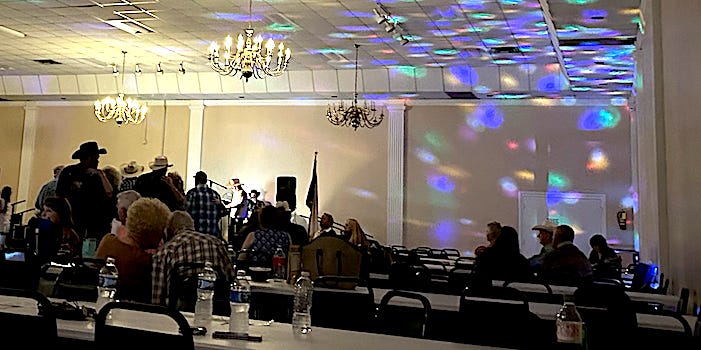
Every Thursday at 7 pm, the Sul Ross Boot Scootin’ Dance Club fills the Waco Lions Den with two-stepping, polkas, waltzes, and a little line dancing thrown in for good measure. Regular performers include Branded Heart along with Johnnie Bradshaw and the Out of the Blue Band, whose classic country sets keep everyone moving around the dance floor until it’s time for a break with a cold Dr Pepper or bottle of water.
Walking into the room after paying your $6 admission can feel a little surreal. Even middle-aged newcomers are likely to find themselves well below the median age as older couples move steadily, if a little slowly, beneath dim chandeliers and colored dance lights scattered across the ceiling tiles. The atmosphere is warm, the bands are solid, and nobody seems especially concerned with whether the rest of Waco is paying attention.
Hemingway’s Watering Hole
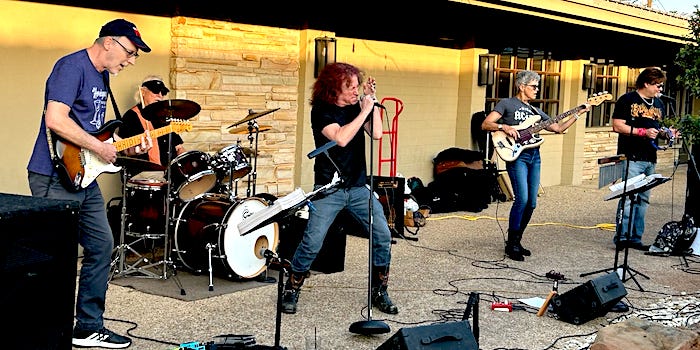
On Monday nights during the spring and fall, the shared courtyard in front of Hemingway’s Watering Hole turns into one of the more laid-back live music setups in Waco. Bands ranging from hard rockers Spirits of Mars to the acoustic duo Eric & Thomas Unplugged rotate through each week while food trucks like Burgertology set up in the parking lot.
The crowds are rarely huge—but you’ll still want to bring your own folding chair if you expect a guaranteed seat—and the routine has held together for years in a city where venues often briefly experiment with live music before abandoning it. Just keep an eye on Hemingway’s Facebook page because Texas weather has a habit of rearranging the schedule at the last minute.
Harmony Band Lab Intensive
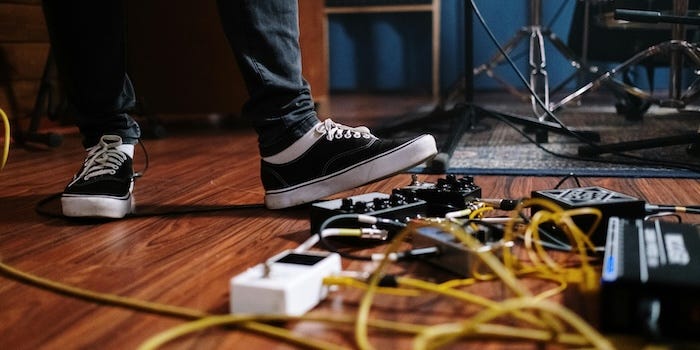
This summer, Texas Music Cafe hands over its stage to a different kind of music scene. During the June and July sessions of Harmony Band Lab Intensive, younger musicians will be sorted into small bands and pushed through the awkward work that turns solitary practice into something loud enough to survive in public. Under the direction of musician and instructor Emiliano León, students will learn how to keep time when somebody speeds up, how to recover after missing a cue, and how to keep playing when the whole thing briefly threatens to fall apart.
Most conversations about local music focus on whoever’s already good enough to headline the weekend schedule. Band Lab Intensive starts much earlier than that. By the end of each two-week session, students are expected to haul their gear onto the Texas Music Cafe stage and play in front of a live audience, stepping into the same room where a mix of touring musicians and local regulars have been holding people’s attention for years.

Ellen Mote’s Contour Lines
Last November during the Austin Avenue Art Fair, artist Ellen Mote sat outside Studio Grocery in downtown Waco, offering six-dollar contour line portraits to anybody willing to sit still long enough to be observed. No polished caricatures. No digital filters. Just a marker, a blank sheet of paper, and prolonged eye contact that quickly became a little unnerving.
🎧 In this nine-minute episode of Your Waco Weekend, Mote talks about moving between jewelry design, cyanotypes, painting, and whatever else currently holds her attention. The conversation drifts through canceled internet service to the strange pressure artists feel to turn themselves into fixed brands, and why certain corners of Waco leave room for slower and more exploratory creative lives.
Subscribe to Your Waco Weekend wherever you get your podcasts—nine minutes, one story.
Coming Next Week
The Weekly Dispatch turns its attention toward the Waco arts scene and the systems holding it together behind gallery openings and First Friday crowds. This ranges from a membership-only arts support network to monthly drink-and-draw gatherings and an immigrant storytelling event blending poetry, music, and visual art. This issue explores how Waco’s arts community sustains itself in a city still trying to decide what kind of arts culture it wants to become.