
The Weekly Dispatch
Every Day Can Be Record Store Day

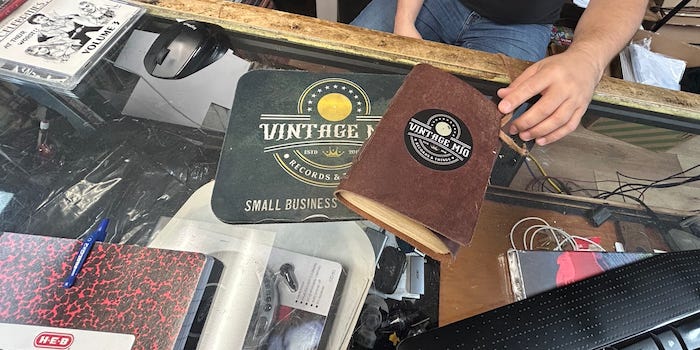
A week before Record Store Day officially arrives on April 18, Vintage Mío is already doing something larger than retail. The bins are full of albums, the vintage concert posters are on the wall, but almost immediately after I arrive, three women come in with a camera and begin taking what look like graduation or promo photos in the back of the store.
It’s more revealing than you might think. Vintage Mío is no longer simply a record store. The music matters, but so does being seen there. It has become a backdrop for identity—a physical room where taste is performed in public.
This matters in smaller cultural ecosystems like Waco’s because recurrence builds meaning. The city’s most interesting retail spaces are increasingly organized around belonging rather than pure commerce.
Record Store Day this Saturday sharpens that pattern. Sure, this event will bring people through the doors of vinyl record stores across the country to buy limited edition, one-off albums. The bigger story, however, is already visible here before the first sale: Vintage Mío is functioning as a cultural node, a room where transaction and self-definition overlap.
Vintage Mío owner Armando Cardoso understands that intersection, even if he tends to describe it in more familiar terms. Standing behind the front counter, he looks over at the impromptu photo shoot unfolding in front of us and says, “Look how happy they are taking photos in my environment that I created.”
That word—environment—is key. What people are seeking in spaces like this is more than inventory. In that sense, the records are only an entry point. The larger payoff is the chance to place yourself inside a world that already carries a point of view. To make the point, Cardoso pulls out a weathered leather notebook where customers leave notes and sign their names, another way they mark their presence.
Beyond what they sell and the aesthetic world they create, retail spaces like Vintage Mío also give people a place to keep running into others who move through the city the same way they do.
Watching the photo shoot continue, Cardoso shrugs and says, “That happens all the time.”
Vintage Mío operates on a different logic: in an era increasingly organized around digital convenience, it still requires physical presence. You have to show up. You have to move through the bins, through the room, through the people already there.
So what happens after a room like this has established itself as a place where people want to belong? At Vintage Mío, the answer is not simply more sales. Cardoso has built the store around a visible ethic of giving, with a percentage of Record Store Day proceeds from this weekend set to benefit Caritas of Waco. It’s become a place where transactions are asked to carry a moral dimension.
He describes watching college students dig through their pockets for loose change and drop it into a donation barrel in front of the checkout counter, and how sometimes they put records back in order to donate more. That shifts the purpose of the room. It begins to ask whether the act of buying can coexist with a visible obligation to the city outside its doors.
That’s the real tension this weekend. Record Store Day is built on scarcity and desire, around the first access to limited pressings. Vintage Mío layers something more complicated on top of that ritual: the possibility that what brings people into the store is also what redirects part of that energy outward. The question is no longer only what you take home, but what you are willing to leave behind.
What’s emerging across Waco is a network of retail spaces organized around drift and chance encounter, where people move through an open social atmosphere and keep running into familiar faces. Others are built around aesthetic allegiance, places where the point is to step into a fully realized world and signal that you understand its codes. Still others slow the pace down altogether, turning browsing into a more deliberate act shaped by curation and setting. What links them is not what they sell but the way they give people distinct ways of belonging to the same city.
This gives Waco a different kind of forward motion. The question is no longer simply what these places sell, but what kind of city they are teaching people to inhabit.
Eastside Thrift & Arts Market
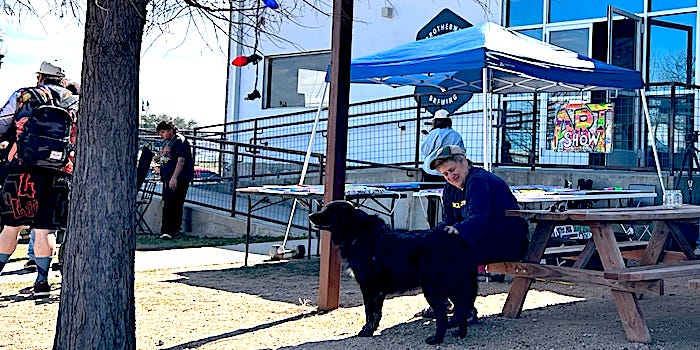
The monthly Eastside Thrift & Arts Market returns at 11 am on Saturday, April 18, bringing together local artists, vintage vendors, and food trucks in Brotherwell Brewing’s beer garden. Part shopping trip, part open-air hangout, the market turns a Saturday errand into something slower, with people meandering from table to table, pints in hand, while DJs and pop-up displays reshape the space around them.
What’s being offered here isn’t only what fits in a shopping bag. Markets like this also function as social spaces, a way of moving through a community rather than simply moving toward a purchase. The real draw is the circulation itself: the chance encounter at one table, a conversation over a pint, the feeling of the beer garden temporarily reorganized around local makers and whoever happens to wander through.
Free and open to the public.
(Want to know more? Check out this episode of Your Waco Weekend.)
Skellington Oddities Market
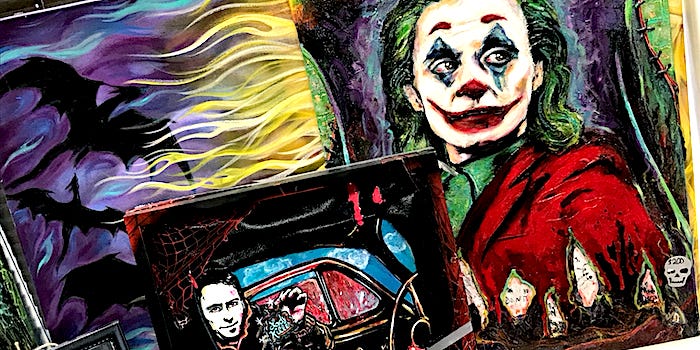
The outdoor Skellington Oddities Market on Saturday afternoon brings together offbeat vendors, performers, and food trucks for an afternoon built around the shop’s spooky-vibe-365 sensibility. Think dark curiosities, unusual finds, sideshow energy, and a crowd drawn in by a shared taste for the strange and theatrical.
Some shopping spaces are organized around utility. This one is organized around a singular point of view—a way of stepping into a fully realized world—where Halloween isn’t a season but an ongoing mode of self-expression. And what you buy doubles as a signal of the atmosphere you want to live inside.
Free and open to the public.
Backyard Boutique Art Fair
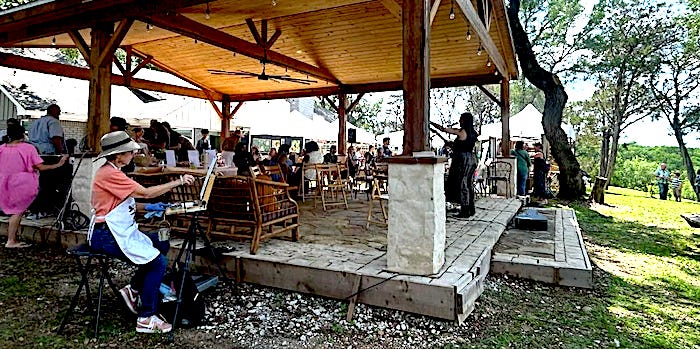
The Backyard Boutique Art Fair returns Saturday, May 9, from 11 am to 6 pm, transforming Wendy Michelle Davis’s home into more of a curated retreat than a conventional market. Despite the wide range of ceramics, printmaking, painting, jewelry, mixed media, live music, and homemade food spread across the day, the draw is selection rather than volume. Everything is chosen with care, each element bringing a distinct visual language and material practice into the same pastoral space.
This market isn’t built for quick transactions or aisle-to-aisle efficiency. The setting itself encourages lingering—walking the garden paths, stopping to talk with artists, moving from ceramics to print work to paintings without any sense of rush. The experience becomes less about shopping as a task and more about spending an afternoon inside a carefully composed destination, where the environment is part of what’s being offered alongside the work.
Free and open to the public.

The Levitt AMP Waco Music Series
Last Thursday’s opening night of the Levitt AMP Waco Music Series at Bridge Street Plaza became more than a free concert. As The Sweetest T, KANSO the Poet, Einstein the Mastermind, Cade Lane, and Ryan the Son moved the evening forward, the plaza itself seemed to change shape.
This episode of Your Waco Weekend follows the shift when civic infrastructure turns into a lived public space where people choose to stay and share the same moment.
Subscribe to Your Waco Weekend wherever you get your podcasts—seven minutes, one story.
Coming Next Week
Next Thursday’s newsletter examines where Waco listens to music, from intimate rooms built for close attention to open spaces designed for crowds. More than a calendar of shows, it’s about what live music requires of a city and what the city gives back.
ugh the switch to the huge AI generated text before the events sucks- I might just unsubscribe I don't need more slop in my life